Medical implants have revolutionized healthcare by providing effective solutions for replacing missing biological structures or enhancing existing ones. Implants are medical devices manufactured to replace a missing biological structure, support a damaged biological structure, or enhance an existing biological function. From dental implants that restore smiles to contraceptive implants that prevent pregnancy, these devices have become essential tools in modern medicine.

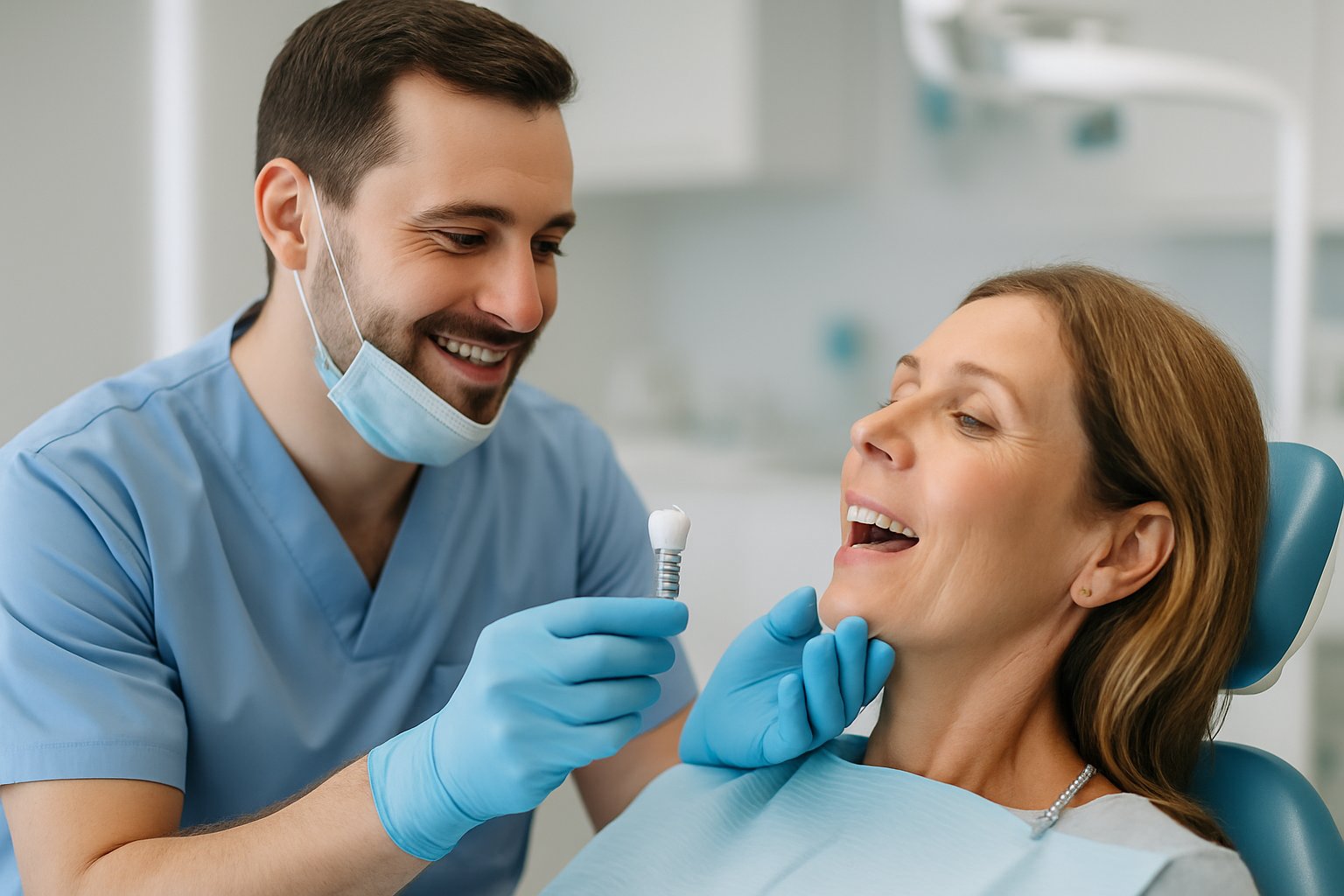
Dental implants are medical devices surgically implanted into the jaw to restore a person’s ability to chew or their appearance, making them one of the most popular and successful implant procedures today. These titanium posts act as artificial tooth roots, providing a stable foundation for replacement teeth that look and function like natural ones. The success rate for dental implants is remarkably high, giving patients confidence in their investment.
Understanding the different types of implants available can help patients make informed decisions about their healthcare needs. Whether someone is considering dental implant surgery to replace missing teeth or exploring other implant options, knowing what to expect from the process can ease concerns and lead to better outcomes.
Key Takeaways
- Implants are versatile medical devices that can replace missing structures or enhance existing biological functions throughout the body
- Dental implants offer a permanent solution for missing teeth with high success rates and natural-looking results
- The implant process involves careful evaluation, surgical placement, and recovery time to ensure optimal outcomes for each patient
What Are Implants?
Dental implants represent a revolutionary approach to replacing missing teeth through surgically placed titanium posts that function as artificial tooth roots. They provide a permanent foundation for crowns, bridges, or dentures while preserving jawbone health.
Definition and Purpose
A dental implant is a metal post that replaces the root portion of a missing tooth. These small, threaded posts are made primarily of titanium or zirconia materials.
Dental implants are medical devices surgically implanted into the jaw to restore a person’s ability to chew or their appearance. They serve as anchors for artificial teeth called crowns.
The implant itself measures between 4mm and 16mm in length. It gets inserted into a prepared socket within the jawbone where the natural tooth root once existed.
Primary purposes include:
- Replacing single missing teeth
- Supporting bridges for multiple missing teeth
- Anchoring full or partial dentures
- Preventing bone loss in the jaw
- Restoring normal chewing function
How Implants Work
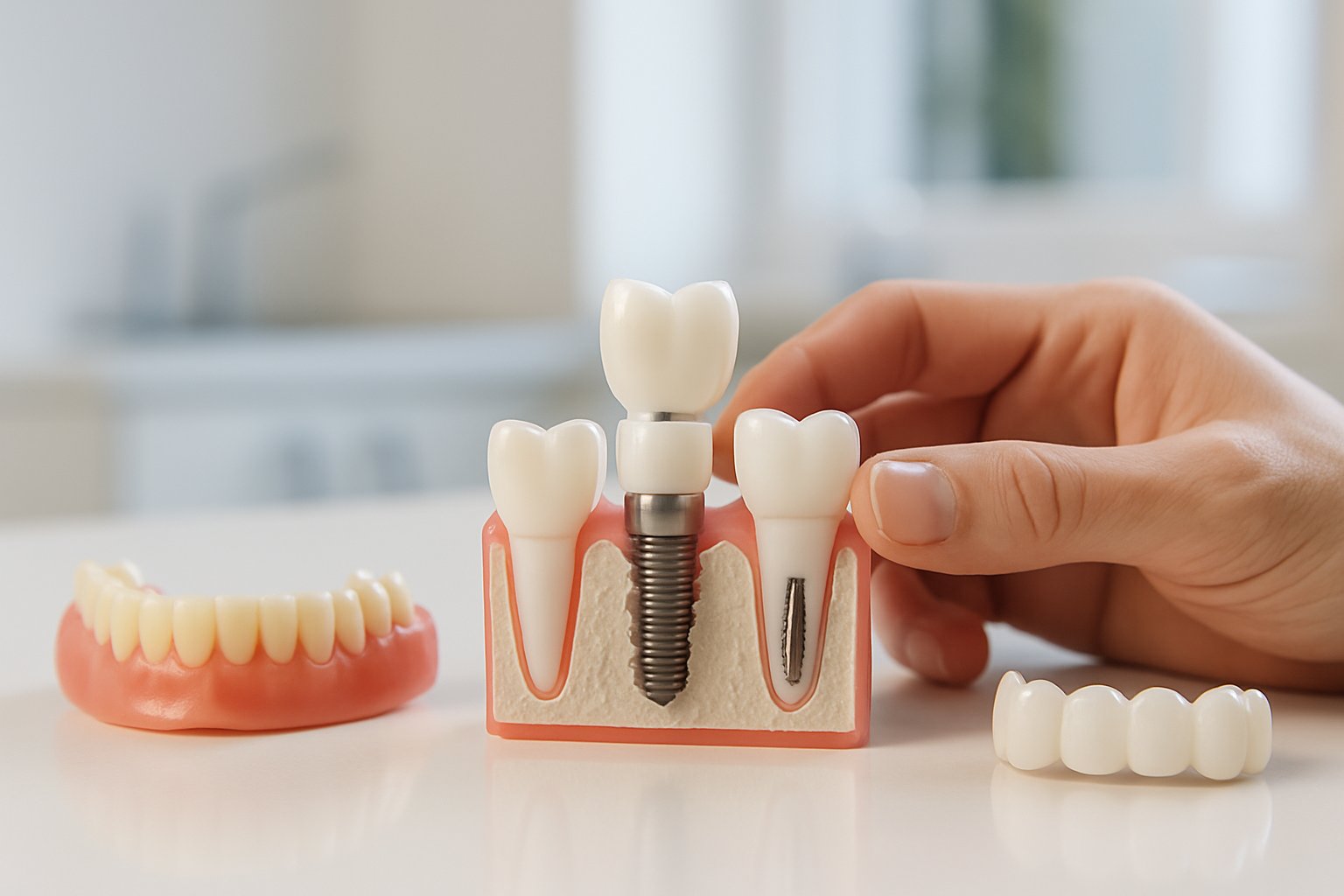
Dental implants are best described as a titanium root replacement. The process involves three main components working together.
The titanium post integrates with the jawbone through a process called osseointegration. This biological fusion creates a stable foundation that mimics natural tooth roots.
An abutment connects to the implant post after healing occurs. This small connector piece extends through the gum tissue to support the final restoration.
The three-part system includes:
- Implant post: Titanium screw placed in jawbone
- Abutment: Connector piece above gum line
- Crown: Artificial tooth attached to abutment
The entire process typically takes 3-6 months to complete. Patients can expect the implant to feel and function like their natural teeth once fully healed.
Benefits Over Traditional Options
With proper care and maintenance, a dental implant can last a lifetime. This longevity surpasses traditional bridges and dentures significantly.
Traditional bridges require grinding down adjacent healthy teeth for support. Dental implants preserve neighboring teeth completely by standing independently.
Key advantages include:
| Implants | Traditional Options |
|---|
| Preserve adjacent teeth | Require alteration of healthy teeth |
| Maintain jawbone density | Allow bone deterioration |
| No daily removal needed | Dentures require removal |
| Natural chewing force | Reduced bite strength |
Dental implants replicate the appearance and function of natural teeth. Patients report improved confidence when speaking and eating compared to removable options.
The implant stimulates the jawbone like natural tooth roots. This prevents the bone shrinkage that commonly occurs with missing teeth or ill-fitting dentures.
Types of Dental Implants and Alternatives
Modern dentistry offers several types of dental implants to replace missing teeth, from single-tooth solutions to full-mouth restorations. Patients can also choose traditional alternatives like bridges and dentures based on their specific needs and bone health.
Single-Tooth Implants
A single-tooth dental implant replaces one missing tooth with a titanium post surgically placed into the jawbone. The implant acts as an artificial tooth root that supports a custom crown.
The Process:
- Surgical placement of the titanium implant
- 3-6 month healing period for osseointegration
- Attachment of an abutment
- Placement of the final crown
Single implants preserve surrounding healthy teeth, unlike traditional bridges that require grinding down adjacent teeth. They also maintain jawbone density by providing stimulation similar to natural tooth roots.
Costs for single implants typically range from $3,100 to $5,800. The investment often pays off through improved function and longevity compared to other tooth replacement options.
Candidates need adequate jawbone density and healthy gums. Patients with insufficient bone may require bone grafting procedures before implant placement.
Implant-Supported Bridges
Implant-supported bridges replace multiple adjacent missing teeth using two or more dental implants as anchors. This approach eliminates the need to alter healthy neighboring teeth.
Common Configurations:
- Two implants supporting a 3-4 tooth bridge
- Three implants for longer spans
- Strategic placement based on bone availability
The implants distribute chewing forces evenly across the jawbone. This prevents the bone loss that typically occurs with removable partial dentures.
Treatment involves placing implants at strategic locations, allowing healing time, then attaching the bridge. The process takes several months but results in a permanent, stable solution.
Implant-supported bridges work well for patients missing 2-4 consecutive teeth. They provide better stability and comfort than removable alternatives while preserving facial structure.
Patients can clean around implant bridges more easily than traditional bridges since no natural teeth are involved in the restoration.
Implant-Supported Dentures
Implant-supported dentures combine the stability of implants with the full-arch coverage of dentures. This option works for patients missing most or all teeth in an arch.
Popular Options:
- All-on-4: Four implants support a full arch
- All-on-6: Six implants for enhanced stability
- Overdentures: Removable dentures that snap onto implants
All-on-4 treatment often allows same-day tooth replacement. Patients receive temporary teeth immediately after implant placement, then permanent restorations after healing.
Implant-supported dentures eliminate common denture problems like slipping, clicking, and sore spots. They also allow patients to eat a wider variety of foods confidently.
The bone stimulation from implants prevents the facial collapse associated with traditional dentures. This maintains a more youthful appearance over time.
Maintenance involves regular cleaning around the implant sites and professional check-ups to ensure long-term success.
Traditional Bridges and Dentures
Traditional bridges and dentures remain viable alternatives to dental implants for patients who cannot undergo implant surgery or prefer non-surgical options.
Traditional Bridges:
- Require grinding down adjacent teeth for crowns
- Span gaps using neighboring teeth as anchors
- Last 10-15 years with proper care
- More affordable initially than implants
Conventional Dentures:
- Removable appliances that rest on gums
- Full or partial options available
- Require adhesives for stability
- Need replacement every 5-7 years
These alternatives work well for patients with insufficient bone density, certain medical conditions, or budget constraints. They require less treatment time and lower upfront costs.
However, traditional options don’t prevent bone loss in the jaw. Dentures may become loose over time as the bone shrinks, requiring adjustments or replacements.
Patients should discuss all options with their dentist to determine the best solution for their specific situation, health status, and long-term goals.
The Dental Implant Process
The dental implant process involves several carefully planned stages that typically span several months. Each phase allows for proper healing and ensures the best possible outcome for long-term tooth replacement.
Initial Consultation and Planning
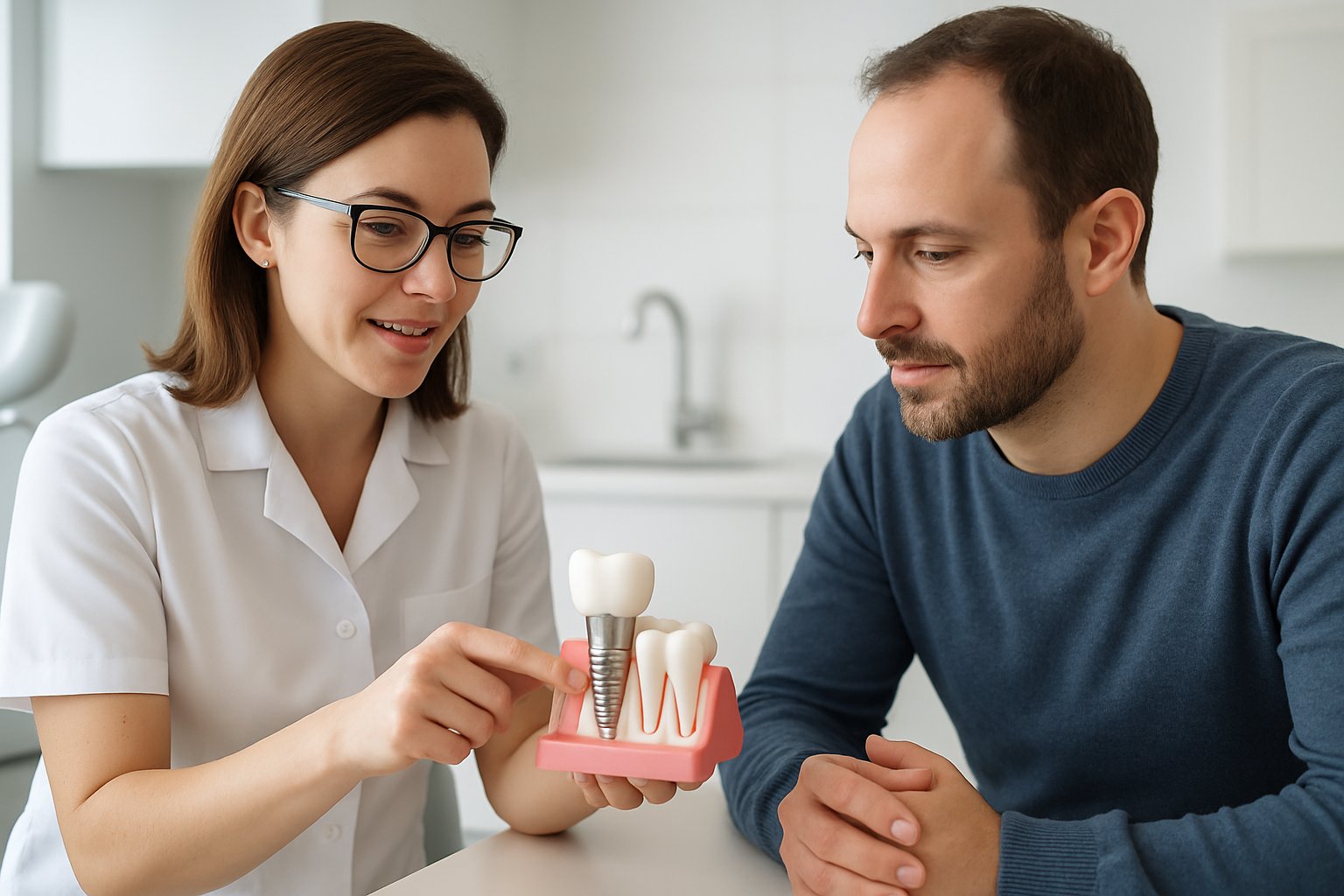
The journey begins with a comprehensive evaluation where the dental professional assesses the patient’s oral health and bone structure. X-rays and imaging provide detailed views of the jawbone to determine the optimal placement location for the implant.
During this phase, the dentist examines the patient’s medical history and current medications. Certain conditions like uncontrolled diabetes or heavy smoking may affect healing and require special consideration.
Treatment planning involves creating a customized approach for each patient’s unique situation. The dentist measures bone density and height to ensure adequate support for the dental implant.
Patients receive detailed information about the procedure timeline and what to expect. The dental team discusses costs, insurance coverage, and payment options during this consultation.
Some patients may require preliminary treatments like bone grafting or tooth extractions before implant placement can begin.
Surgical Placement of Implants
The surgical placement involves inserting the implant body into the jawbone where it will replace the natural tooth root. Local anesthesia ensures patient comfort throughout the procedure.
The dentist creates a small incision in the gum tissue to access the underlying bone. A precisely sized hole is drilled into the jawbone to accommodate the threaded titanium implant.
The implant post is carefully positioned and secured into the prepared site. The surrounding gum tissue is then sutured closed to protect the healing area.
Most patients experience minimal discomfort following surgery. Swelling and mild pain typically subside within a few days with proper care and prescribed medications.
Recovery instructions include avoiding hard foods and maintaining gentle oral hygiene around the surgical site. Patients should avoid smoking and excessive physical activity during initial healing.
Healing and Osseointegration
The healing process typically takes 2 to 3 months as the bone begins to grow around and fuse with the implant surface. This biological process is called osseointegration and creates a stable foundation.
During this period, patients wear temporary restorations or continue using existing partial dentures. Regular check-ups allow the dentist to monitor healing progress and address any concerns.
Proper osseointegration is crucial for long-term implant success. The titanium implant becomes permanently integrated with the surrounding bone tissue, creating strength comparable to natural tooth roots.
Patients must maintain excellent oral hygiene and follow all post-operative care instructions. Avoiding tobacco use and limiting alcohol consumption supports optimal healing conditions.
Signs of successful integration include lack of mobility when the implant is gently tested and absence of pain or discomfort around the site.
Final Restoration and Aftercare
Once osseointegration is complete, the dentist attaches an abutment to the implant post. This connector piece will support the final crown, bridge, or denture restoration.
Impressions are taken to create a custom restoration that matches the patient’s natural teeth in color, shape, and size. The final crown is designed to blend seamlessly with surrounding teeth.
The completed dental implant functions like a natural tooth for biting, chewing, and speaking. With proper care and maintenance, dental implants can last a lifetime.
Ongoing aftercare includes regular dental check-ups, professional cleanings, and daily brushing and flossing. Special attention to the gum tissue around the implant prevents complications.
Patients should schedule follow-up appointments as recommended to ensure the implant remains healthy and functional. Early detection of any issues allows for prompt treatment and better outcomes.
Who Is a Good Candidate for Implants?
Successful dental implant placement depends on several key factors including overall health status, adequate jawbone density, and lifestyle choices that support healing. Most adults with missing teeth can receive dental implants when these conditions are met.
General Health and Oral Health Requirements
Good overall health forms the foundation for successful dental implant treatment. Patients need healthy immune systems to support proper healing and integration of the implant with surrounding bone tissue.
Essential oral health criteria include:
- Healthy gums free from active periodontal disease
- Adequate oral hygiene habits and commitment to maintenance
- Absence of untreated tooth decay in remaining teeth
- Control of any existing gum inflammation
Candidates must have healthy gums and sufficient jawbone density to securely hold the implant in place. Active gum disease creates an environment that prevents proper healing around the implant site.
Patients with diabetes can receive dental implants when their blood sugar levels remain well-controlled. Uncontrolled diabetes significantly increases the risk of implant failure and poor wound healing.
Those taking certain medications like bisphosphonates or blood thinners may need special considerations. A thorough medical review helps determine the best timing and approach for implant placement.
Age and Jawbone Considerations
A leading requirement for dental implant surgery is adequate jawbone support. The jawbone must possess sufficient density and volume to anchor the titanium implant securely.
Age-related factors include:
- Minimum age: Typically 18-21 years when jaw growth is complete
- Maximum age: No upper limit for healthy adults
- Bone quality: Generally decreases with age, especially in women after menopause
Bone loss often occurs after tooth extraction, with significant reduction happening within the first year. Patients who have been missing teeth for extended periods may require bone grafting procedures before implant placement.
Three-dimensional imaging reveals the exact bone dimensions and quality at potential implant sites. This technology allows precise treatment planning and identifies cases where additional procedures might be necessary.
Women experiencing hormonal changes during menopause may have reduced bone density. However, this doesn’t automatically disqualify them from receiving dental implants with proper evaluation and planning.
Lifestyle and Habits Impacting Success
The ideal candidate for dental implants is a non-smoker with healthy gums and sufficient bone density. Smoking significantly reduces blood flow to the healing tissues and dramatically increases failure rates.
Critical lifestyle factors:
| Positive Factors | Negative Factors |
|---|
| Non-smoking status | Heavy smoking |
| Moderate alcohol use | Excessive alcohol consumption |
| Good oral hygiene | Poor dental care habits |
| Regular dental visits | Teeth grinding (untreated) |
Heavy alcohol consumption impairs the body’s healing response and can interfere with bone integration around the implant. Patients should limit alcohol intake during the healing period.
Teeth grinding or clenching puts excessive force on dental implants and can lead to complications. A nightguard effectively protects implants from these harmful forces during sleep.
Commitment to long-term oral hygiene remains essential for implant success. Patients must demonstrate willingness to maintain regular brushing, flossing, and professional cleanings to prevent peri-implantitis around the implant site.
Cost and Value of Dental Implants
Dental implant costs typically range from $3,000 to $6,000 per tooth, but understanding the complete financial picture requires comparing options, exploring coverage possibilities, and considering long-term benefits. Smart patients weigh upfront investments against decades of improved function and confidence.
Comparing Costs: Implants, Dentures, and Bridges
Single dental implants range from $3,000 to $5,000 including the post, abutment, and crown. This initial investment appears higher than alternatives, but the comparison becomes clearer when patients examine total lifetime costs.
Traditional bridges cost $2,500 to $5,000 initially but require replacement every 10-15 years. The adjacent healthy teeth need reshaping, potentially creating future problems that increase long-term expenses.
Dentures present the lowest upfront cost at $1,500 to $3,000 for a full set. However, they require regular adjustments, relines, and replacements every 5-7 years. Adhesives, cleaning products, and maintenance visits add ongoing expenses.
| Treatment | Initial Cost | Lifespan | Replacement Frequency |
|---|
| Dental Implants | $3,000-$5,000 | 25+ years | Rarely needed |
| Bridges | $2,500-$5,000 | 10-15 years | Every decade |
| Dentures | $1,500-$3,000 | 5-7 years | Multiple times |
The complete cost for implants includes surgical placement, healing time, and final restoration. Most patients find this one-time investment more economical than repeated treatments over decades.
Insurance Coverage and Financing
Most dental insurance plans cover 50-80% of bridge and denture costs but limit implant coverage to $1,000-$2,000 annually. Patients often need to advocate for coverage by emphasizing medical necessity rather than cosmetic benefits.
Flexible Spending Accounts and Health Savings Accounts allow pre-tax dollars for implant treatment. This tax advantage effectively reduces the real cost by the patient’s tax bracket percentage.
Many dental practices offer financing options with 0% interest for 12-24 months. Dental providers like Aspen Dental often provide payment plans that make treatment accessible without waiting.
Some patients qualify for dental school programs or clinical trials that reduce costs significantly. Veterans may receive implant coverage through VA benefits for service-related tooth loss.
CareCredit and similar medical financing companies extend payment terms up to 60 months. Patients can begin treatment immediately while spreading costs over manageable monthly payments.
Long-Term Investment and Quality of Life
Dental implants typically last 25+ years with proper care, making them the most cost-effective tooth replacement option over time. The titanium posts integrate with jawbone, creating permanent foundations that rarely need replacement.
Bone preservation sets implants apart from other options. Dentures and bridges allow continued bone loss, eventually affecting facial structure and requiring additional treatments. Implants stimulate bone growth, maintaining natural facial proportions.
Daily life improvements justify the investment for most patients. Implants restore 95% of natural chewing force, allowing unrestricted food choices. Bridge wearers often avoid certain foods, while denture users face significant dietary limitations.
Professional confidence increases when patients speak and smile without worry. Unlike dentures that can slip during important moments, implants provide security in social and work situations.
The maintenance requirements remain minimal compared to alternatives. Regular brushing, flossing, and dental visits suffice, while dentures require special cleaning routines and frequent adjustments that add time and expense throughout life.
Frequently Asked Questions
Patients considering implants often have specific questions about preparation, comfort, and long-term care. Understanding the financial aspects, maintenance needs, and potential side effects helps individuals make informed decisions about their treatment options.
What should you consider before choosing a dental implant procedure?
A person should evaluate their overall oral health and bone density before pursuing dental implant treatment. The jawbone needs sufficient thickness and height to support the implant properly.
Medical history plays a crucial role in determining candidacy. Conditions like uncontrolled diabetes, heavy smoking, or certain medications can affect healing and implant success rates.
Age and lifestyle factors matter significantly. While there’s no upper age limit, patients should be healthy enough to undergo minor surgery and committed to proper oral hygiene afterward.
Financial planning requires careful consideration. Most dental insurance plans provide limited coverage for implants, so patients often pay substantial out-of-pocket costs.
How can you manage any potential side effects from contraceptive implants?
Irregular bleeding represents the most common side effect of hormonal implants. Women can track their cycles and discuss treatment options with their healthcare provider if bleeding becomes problematic.
Mood changes may occur during the first few months after insertion. Patients should monitor their emotional well-being and report significant changes to their doctor promptly.
Weight fluctuations affect some users, though research shows mixed results. Maintaining a healthy diet and regular exercise routine helps manage any potential weight changes.
Insertion site tenderness typically resolves within a few days. Applying ice packs and taking over-the-counter pain relievers can provide relief during the initial healing period.
What are the long-term considerations for someone with a birth control implant?
Fertility returns quickly after implant removal, often within a few weeks. Women planning future pregnancies should discuss timing with their healthcare provider well in advance.
Bone density monitoring becomes important for long-term users. Some hormonal implants may affect bone mineral density, particularly in younger women whose bones are still developing.
Regular check-ups ensure the implant remains properly positioned. Healthcare providers can detect any migration or complications during routine examinations.
Replacement timing requires advance planning. Most contraceptive implants need replacement every three to five years to maintain effectiveness.
How does the cost of dental implants compare to alternative treatments?
Dental implants cost more initially than bridges or dentures but often prove more economical over time. A single implant can last 20-30 years with proper care.
Traditional bridges require replacing adjacent healthy teeth, which can lead to additional costs later. Implants preserve surrounding teeth and maintain jawbone structure better than removable options.
Dentures need regular adjustments, relines, and eventual replacement every 5-10 years. These ongoing expenses can exceed the one-time cost of implants over a patient’s lifetime.
Insurance coverage varies significantly between providers and plans. Patients should verify their benefits and explore financing options before beginning treatment.
What are the expected maintenance requirements after getting a dental implant?
Daily brushing and flossing remain essential for implant longevity. Patients should use a soft-bristled toothbrush and non-abrasive toothpaste to protect the crown and surrounding gums.
Professional cleanings every six months help prevent complications. Dental hygienists use special instruments designed specifically for cleaning around implants without damaging the surface.
Regular dental examinations allow early detection of potential problems. Dentists check the implant stability, crown condition, and surrounding tissue health during routine visits.
Avoiding harmful habits protects the investment long-term. Patients should refrain from chewing ice, using teeth as tools, or grinding their teeth without a protective guard.
How do modern implants enhance patient comfort during and after the procedure?
Advanced surgical techniques minimize tissue trauma and reduce recovery time. Many dentists use guided surgery with 3D imaging to place implants more precisely and less invasively.
Local anesthesia ensures patients feel no pain during the procedure. Sedation options are available for those who experience dental anxiety or prefer to be more relaxed during treatment.
Modern implant surfaces promote faster healing and better integration with the jawbone. Specialized coatings and textures encourage bone growth and reduce healing time.
Post-operative pain management has improved significantly with better medications and protocols. Most patients report minimal discomfort that responds well to over-the-counter pain relievers.
Patients should discuss their concerns and preferences with their dental team to ensure the most comfortable experience possible. Open communication helps address anxiety and establishes realistic expectations for the treatment process.